

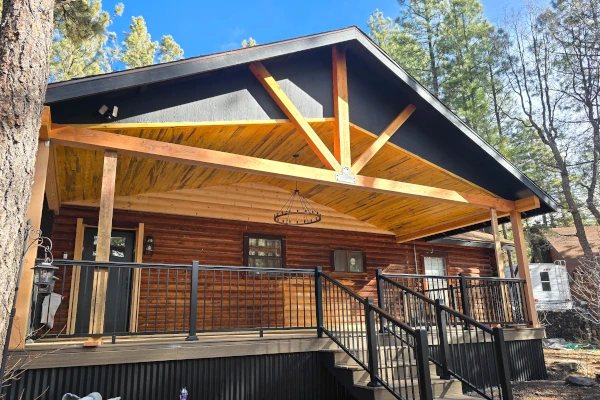
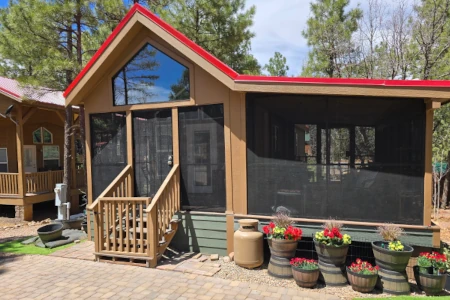
 A covered deck is a deck that includes a permanent overhead structure, typically a roof that protects the space from sun, rain, and snow. This added layer changes not just how the deck looks, but how it functions throughout the year.
Covered decks can take several forms, depending on budget and design goals:
- Fully roofed structures attached to the home
- Pergolas that provide partial shade while still allowing light through
- Screened-in or enclosed decks for added protection from weather and insects
Because of the added structure, covered decks usually require more planning and a larger investment. However, they create a more controlled and comfortable outdoor environment that can be used more consistently, even during intense sun or changing weather conditions.
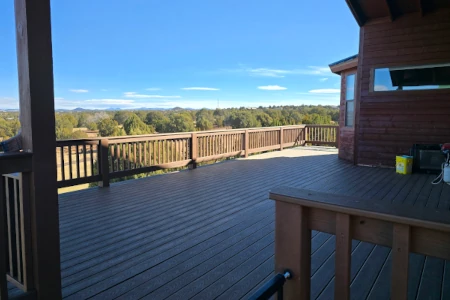 An open deck is a traditional deck with no overhead covering, leaving the space fully exposed to the sky. It’s the most straightforward approach to outdoor living and often the first thing people picture when they think of a backyard deck.
Because there’s no roof structure, open decks are typically simpler to design and build:
- Fewer materials and lower upfront cost
- Faster construction timeline
- Greater flexibility in layout and expansion
What really sets an open deck apart is the experience it provides. With nothing overhead, you get full sun, open air, and unobstructed views of the surrounding landscape.
- Ideal for enjoying morning light and evening sunsets
- Creates a more natural, outdoors-first atmosphere
- Feels less like an extension of the home and more like being outside
That simplicity is part of the appeal, but it also comes with tradeoffs depending on the environment.
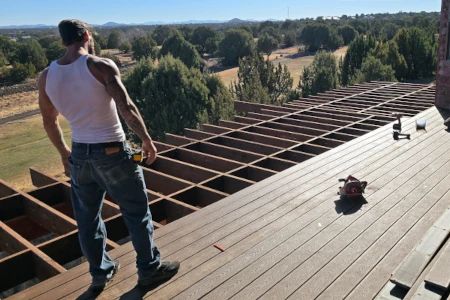
Cost is often one of the deciding factors, and the difference between these two options is significant—not just upfront, but over time.
In the White Mountains, a covered deck typically runs between $25,000 and $60,000 or more depending on size, materials, and complexity. That range reflects the added requirements of a structure built for this climate: heavier framing and posts engineered for snow loads, roofing materials rated for freeze-thaw cycles, proper footings that reach below the frost line, and often electrical work for lighting or ceiling-mounted heaters. Permitting and inspections add both time and cost on top of that. It’s a larger upfront commitment, but one that pays off in durability and year-round usability in a climate that puts materials to the test.
An open deck is a much more straightforward investment, generally falling between $10,000 and $30,000 for a well-built structure in this area. Lower material and labor costs, a faster build timeline, and fewer permitting complications keep the entry point accessible. That said, full exposure to high-elevation UV, monsoon moisture, and hard freezes means maintenance is more frequent and materials may need replacement sooner. Shade solutions like pergolas or sail shades can also add $2,000 to $8,000 later if comfort becomes a priority.
In practical terms, an open deck is easier to get into, while a covered deck is built for longer-term performance and convenience. The right choice depends on how you plan to use the space—and how much of the White Mountains climate you want working with you versus around you.
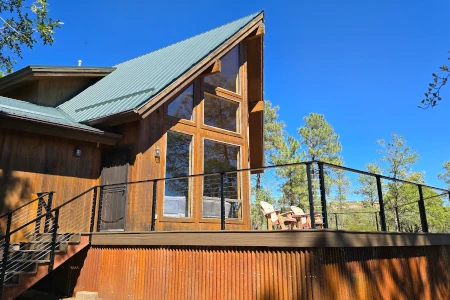 There isn’t a single “right” answer here—only the option that better matches how you want to live outside.
Start with a simple question: What do you want your deck to feel like?
If you picture stepping outside and being fully immersed in the environment—the light, the air, the views—then an open deck aligns with that vision. It prioritizes experience over control and keeps things simple.
If, instead, you’re thinking about comfort, consistency, and daily use, a covered deck starts to stand out. It removes a lot of the friction that comes with weather and sun exposure, making the space easier to enjoy at any time.
It also helps to think in terms of priorities:
- Choose an open deck if you value:
- Unobstructed views and natural light
- A more traditional, outdoors-first feel
- Lower upfront investment
- Choose a covered deck if you value:
- Shade, protection, and extended usability
- A more polished, “outdoor living room” feel
- Long-term comfort with less exposure to the elements
And if neither feels like a perfect fit, that’s normal. Many homeowners end up blending the two approaches to get the best of both worlds.