

 When evaluating land in Arizona’s White Mountains, carefully consider the distance to essential services such as hospitals, schools, grocery stores, and pharmacies. Primary communities—Show Low, Pinetop-Lakeside, and Greer—serve as the main hubs for these amenities. Remote parcels may require drives of 30 to 60 minutes or longer, which can become challenging during monsoon seasons or occasional winter weather.
Properties closer to these towns generally offer greater convenience and stronger resale potential, while more isolated locations appeal to those seeking privacy or an off-grid lifestyle, provided they are prepared for increased self-reliance.
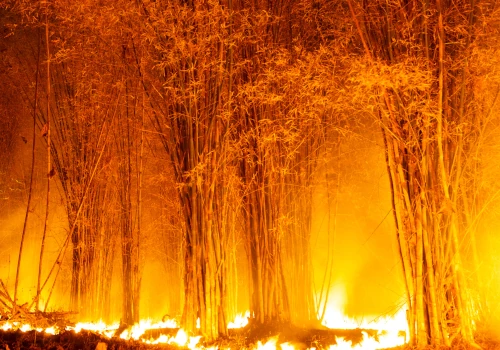 Arizona’s White Mountains carry specific natural risks that deserve close attention. Wildfire is the primary concern in dense ponderosa pine areas—review current wildfire risk maps and past fire history for the vicinity.
Summer monsoons bring flash flood potential, so examine FEMA flood zone designations and natural drainage patterns on or near the property.
Occasional winter storms can add snow and ice challenges. Understanding these hazards helps you plan for fire-resistant construction, defensible space, proper site drainage, and insurance requirements.
 Utilities can be one of the biggest hidden costs in the White Mountains. Check how far the nearest power lines are—extending electricity in remote forested areas often runs tens of thousands of dollars.
High-speed internet availability varies widely; some areas still rely on satellite or limited cellular options.
Many buyers opt for off-grid setups with solar (strong potential here due to abundant sunshine), propane, and generators. Evaluate these options early, along with any future connection fees or capacity limitations, to align with your budget and lifestyle goals.
 Soil conditions in the White Mountains can vary widely due to volcanic origins and rocky composition. Before buying, arrange for a professional soil test (including percolation or “perc” tests for septic systems) to assess stability, drainage, and load-bearing capacity.
Some areas have expansive clay or rocky layers that complicate foundations or septic placement, while others drain well but may require special engineering.
These tests are inexpensive compared to the cost of surprises during construction. Reliable results help you confidently plan your home’s foundation and waste system.
 Water access is a critical consideration in this semi-arid region. Most properties rely on drilled wells, and depth, yield, and water quality can vary greatly. Drilling costs often range from $10,000 to $30,000 or more, depending on depth and geology.
Have a hydrogeologist or experienced driller evaluate the property’s potential before purchase.
Alternatives include rainwater harvesting, cisterns, or hauling water (less practical for year-round living). Confirm water rights and test for quality to ensure a reliable, safe supply for your home and future needs.